A whole-person framework for understanding and supporting recovery, healing, and growth.
HARP™ is an evolving body of work developed by Mary VonO, grounded in the understanding that meaningful, lasting change requires looking beyond symptoms to the whole person.
At the heart of HARP are two interconnected dimensions: the HARP™ Model and the HARP™ Process. The Model provides a framework for understanding the interconnected factors that contribute to harm and harmony; the Process provides a personalized way of putting that understanding into practice.
Introducing HARP™
The Origins of HARP™HARP™ originally emerged as an acronym for Holistic Addiction Recovery Process, reflecting my work in addiction recovery. Over time, I came to recognize that many of the same underlying principles could be applied more broadly to recovery, healing and transformative growth.
Origins of HARP™
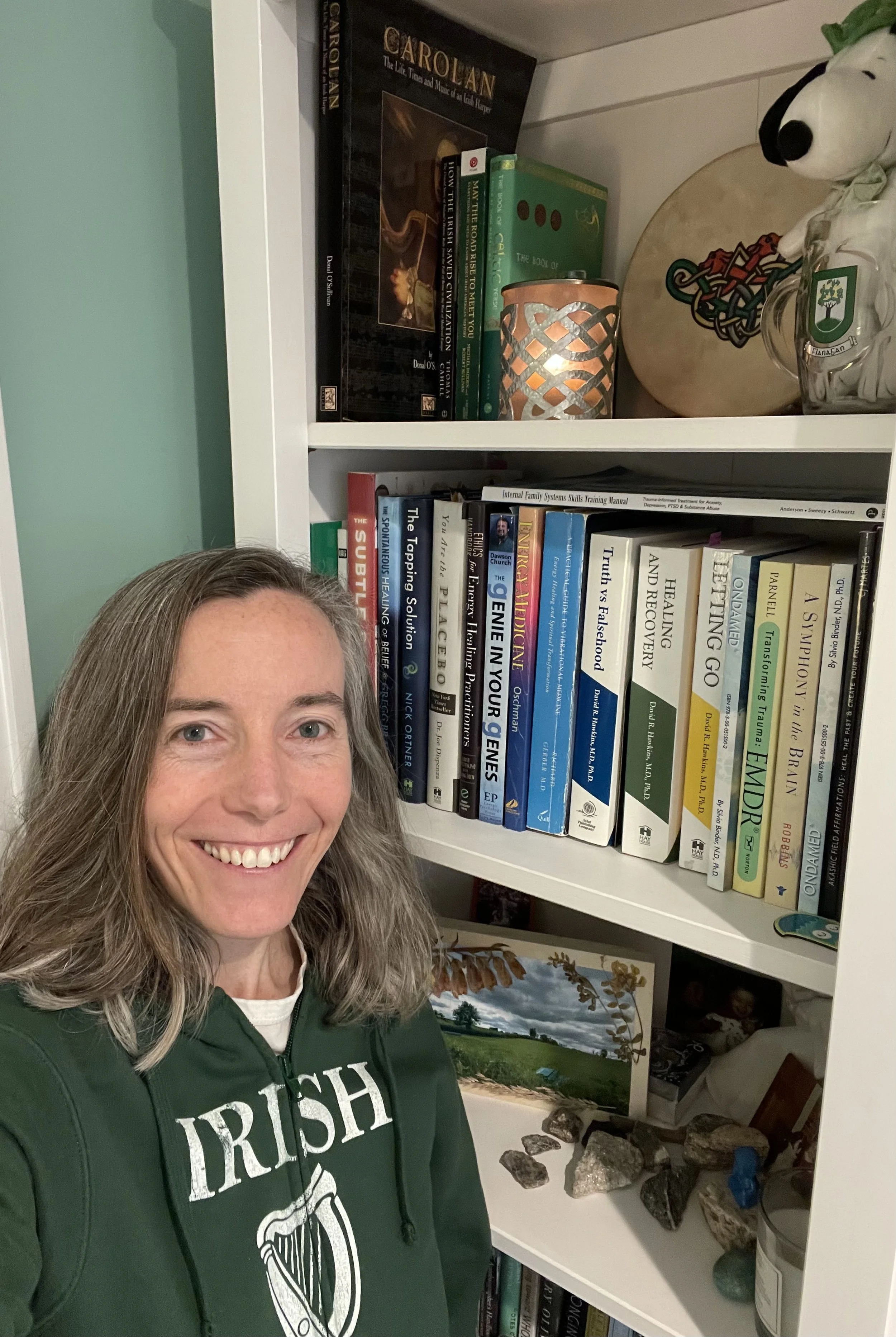
The name HARP™ carries personal meaning for me as well—a nod to my Irish heritage and the rich symbolism of the harp itself.
HARP™ grew out of decades of personal recovery, professional practice, and a lifelong curiosity about what contributes to human struggle—and what helps people create lasting, meaningful change.
From the beginning, I was drawn to looking beneath the surface. Because addiction is a complex, multifaceted condition that involves and affects the whole person, I came to believe that lasting recovery requires more than addressing symptoms or changing a single behavior. It calls for understanding and supporting the interconnected physical, mental, emotional, spiritual, and behavioral dimensions of a person's life.
Over many years—through my own recovery, participation in recovery communities, exploration of holistic healing, and work with clients—I began to recognize recurring patterns. Although every person's story was unique, many of the underlying factors contributing to struggle were similar. Likewise, those experiencing lasting recovery and meaningful healing had often strengthened many of the same core areas of their lives.
Those observations led me to look more deeply at what existing research and other established perspectives had to say about the underlying contributors to addiction and the factors associated with lasting recovery. Together, that study and my own personal and professional experience became the foundation of HARP™.
At the heart of HARP™ is a simple idea: we can move from patterns of harm toward greater harmony.
Harm describes the states of distress, struggle, disconnection, or limitation that can arise when important aspects of our lives are hurting, neglected, overwhelmed, or working against one another.
Harmony doesn't mean a life without difficulty. It describes a state of greater integration—where the different parts of ourselves are better supported and working together, allowing for greater peace, empowerment, and possibility.
HARP™ helps us understand what may be contributing to harm, identify what needs attention and support, and create a personalized path toward greater harmony.
From Harm to Harmony
The HARP™ Model
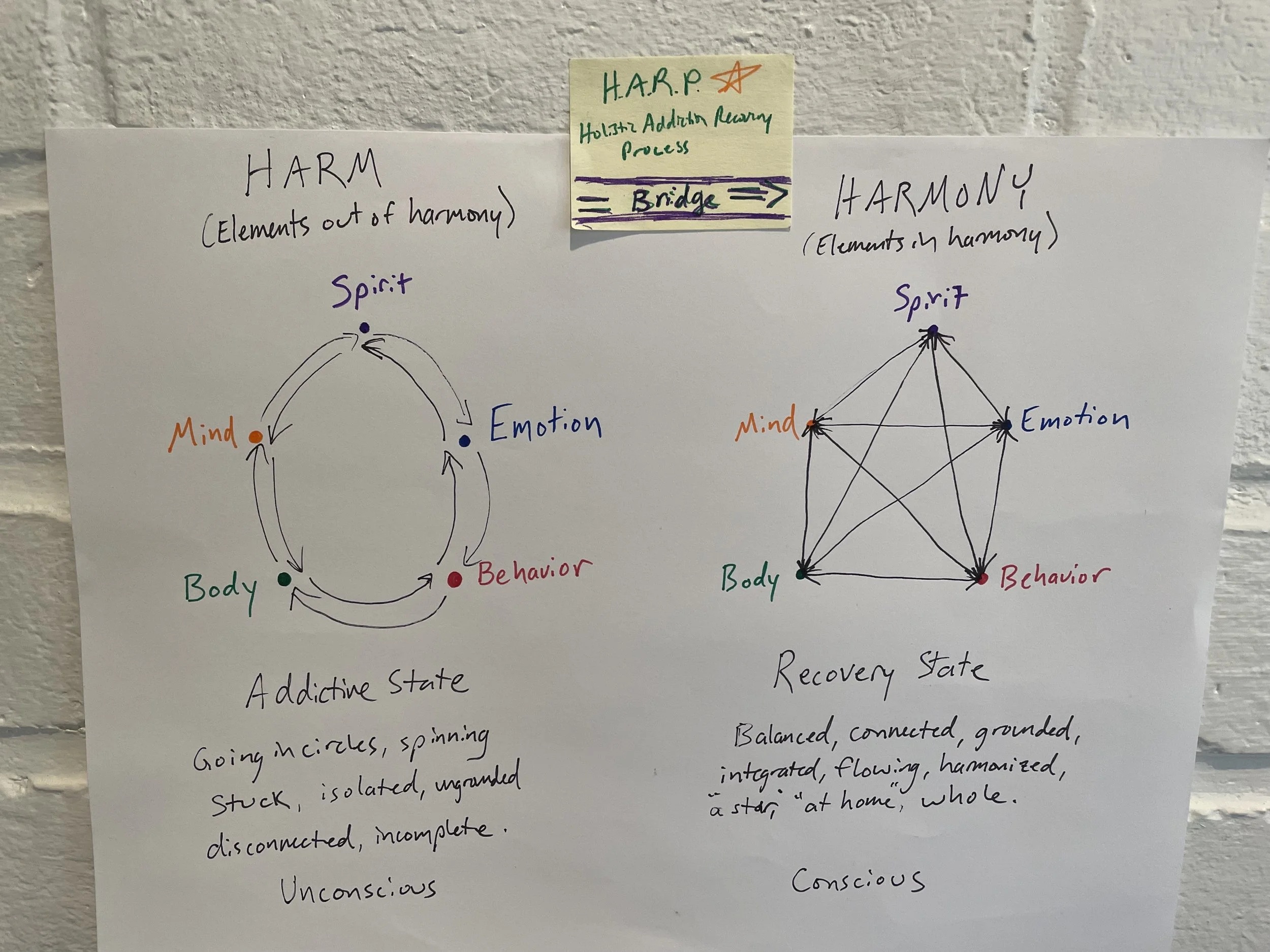
An early working sketch exploring the movement from harm to harmony.
A framework for understanding.
The HARP™ Model offers a whole-person lens for understanding the interconnected factors that contribute to both harm and harmony.
The Model recognizes five fundamental elements of our human experience—physical, mental, emotional, spiritual, and behavioral—and explores how each can influence the others.
Rather than asking only What is the problem?, the Model encourages us to look deeper:
What may be contributing to it? What has been affected by it? Where is there disconnection or imbalance? What strengths and resources are already present? And what might need greater attention and support?
Our struggles rarely exist in isolation. A challenge in one area can ripple throughout the whole system. Likewise, positive change in one area can begin to strengthen others.
The Model provides a map for seeing these relationships more clearly—and for identifying opportunities to move from patterns of harm and disconnection toward greater integration and harmony.
The HARP™ Process
Putting understanding into practice.
If the Model provides the map, the HARP™ Process is about finding your way through it.
Using the whole-person perspective of the Model, the Process helps identify where someone is now, what may need attention, what strengths can be built upon, and which next steps may best support meaningful change.
Because every person's history, needs, resources, strengths, and goals are different, the path is personalized. The Process may draw from a variety of tools, practices, professional resources, and complementary forms of support, thoughtfully selected and integrated according to the individual.
The aim is greater awareness, connection, resilience, alignment, and choice—so that over time, the different elements can work together in greater harmony.
From Understanding to Experience
HARP™ provides the framework that informs my work; the VONO™ Method reflects the guiding themes I bring to putting that framework into practice with each individual.
Grounded in Vulnerability, Originality, Nuance, and Oneness, the VONO™ Method honors both the recognizable patterns of healing and the uniqueness of every person's path.